
The Probus Walking Club held its first outing on March 26th. We walked through the area of Toronto known as The Annex, an area of the city stretching from Avenue Road to Bathurst Street, and from Bloor Street to the CP railway line just above Dupont Street. The area was a prosperous neighbourhood that was annexed by the City of Toronto in the late 19th century and contains outstanding examples of several architectural styles popular at that time.
We also crossed Avenue Road to walk through Yorkville, another old Toronto neighbourhood with lots of history, and ended up at Hemmingway’s restaurant for an optional lunch.
We took the subway to Bathurst subway station and walked east along Bloor St. where the traffic signal control box greeted us.
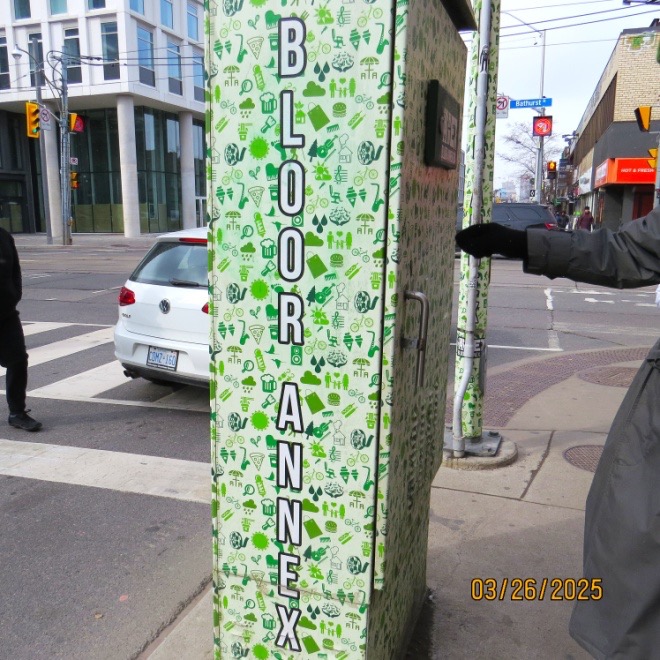
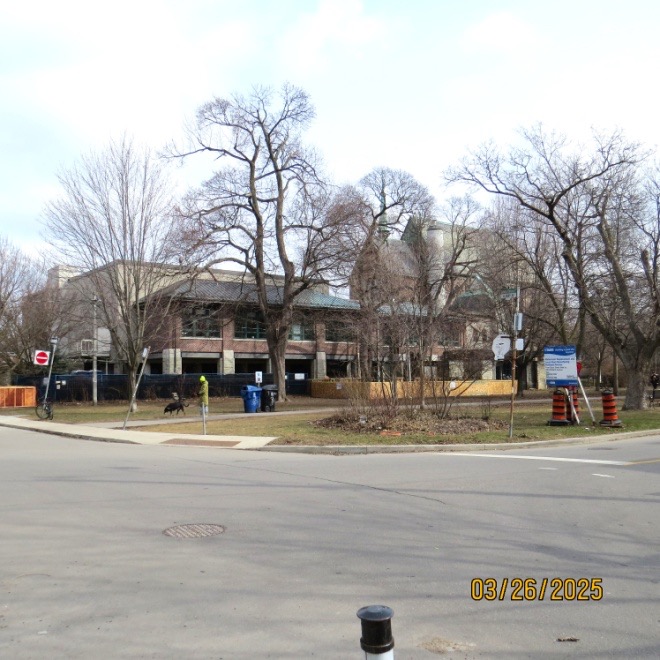
In the background, barely visible, is part of the building that replaced the old Honest Ed’s store. One block east, we turned up Albany Avenue toward St. Alban’s square. This hidden area of Toronto was once destined for great things. In the late 1800s, the Anglican bishop of Toronto proposed building a great new cathedral for the church, and he chose this site. As you probably know, it takes many years to build a cathedral, sometimes centuries. The project moved along until World War I, when resources had to be diverted elsewhere and the project languished. Construction resumed but was soon halted again by the Great Depression and was eventually abandoned. The foundations and the choir were already in place and the existing parts became St. Andrew’s Japanese congregation. When that congregation dwindled, a private boys’ choir school, Royal St. George’s College was established that used the existing buildings. Since then, further building has taken place on the original foundations to provide more classrooms.
Here is an over-all view of the school:
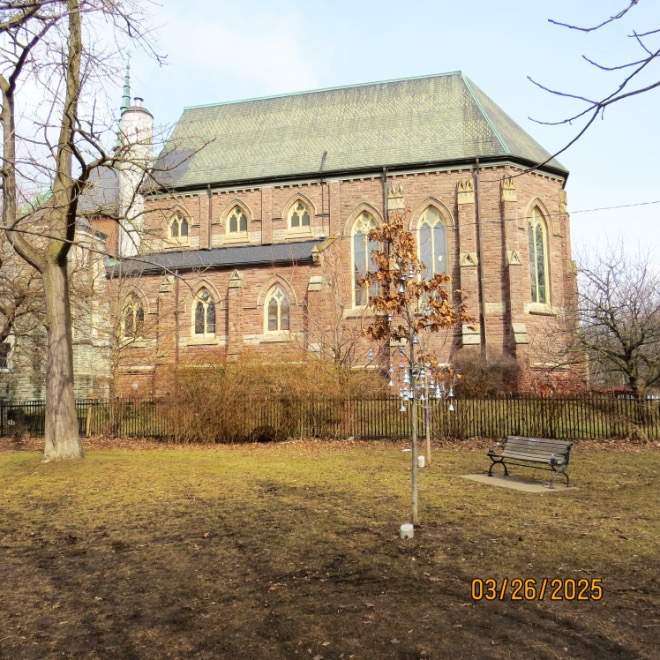
And here is a close-up of the choir which is used as a chapel for St. George’s.
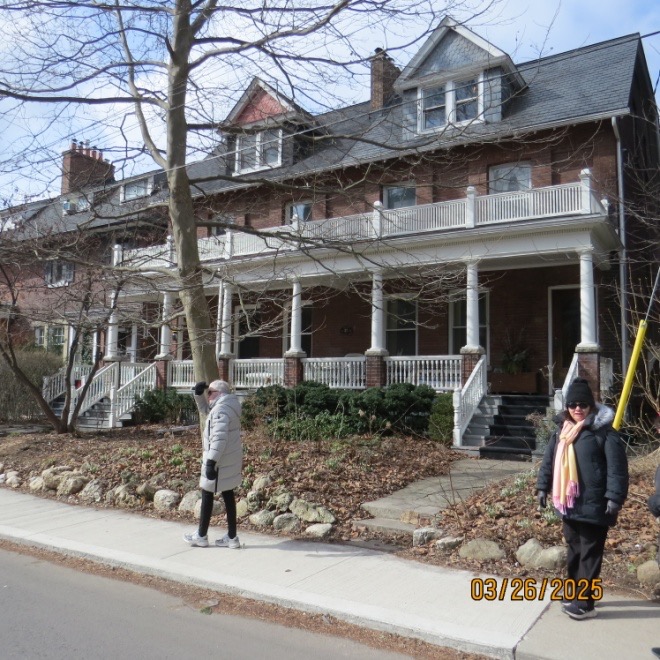
Not to seem discriminating, but I should mention that the section of the Annex closer to Bathurst has more Edwardian row housing than the sections closer to Avenue Road.
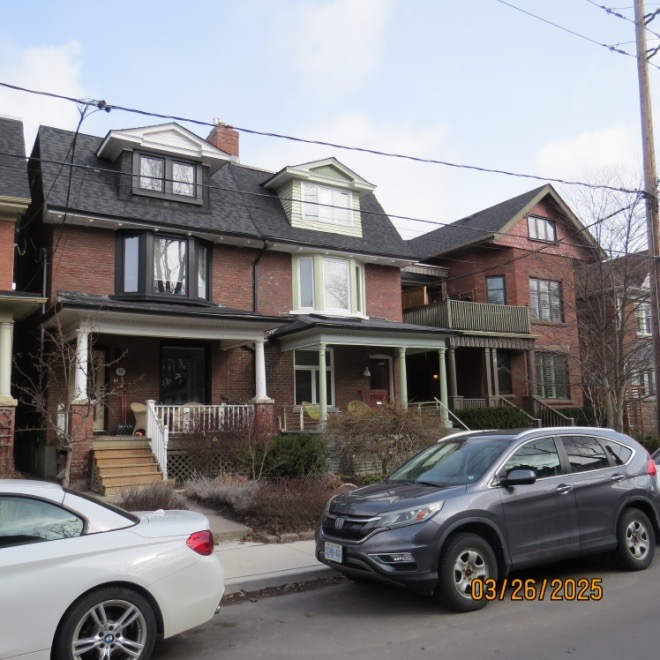
Closer to Avenue Road, the observer can notice that the population was more affluent. A very popular style of architecture at the time was Richardsonian Romanesque revival (as in Old City Hall).
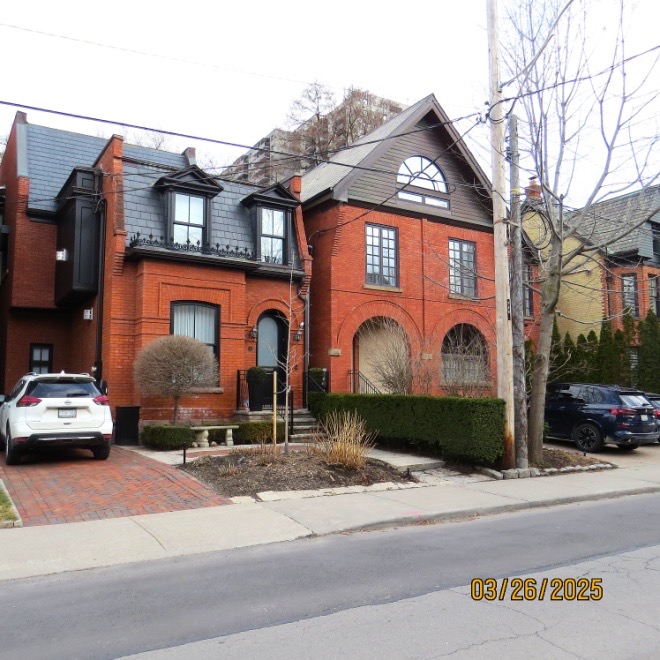
There are also some splendid examples of Queen Anne Style which features round towers.
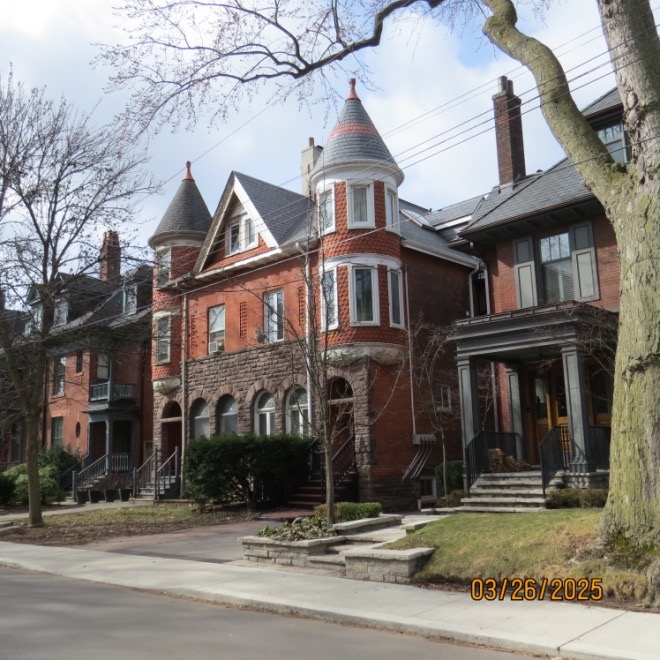
This home looks exactly like the homes we saw on our visit to Malta. I wonder how the builder found this style.

Crossing over Avenue Road to Yorkville, an even more historic neighbourhood, we saw how even the humblest dwelling has become worth millions.
Here is some beautiful row housing.
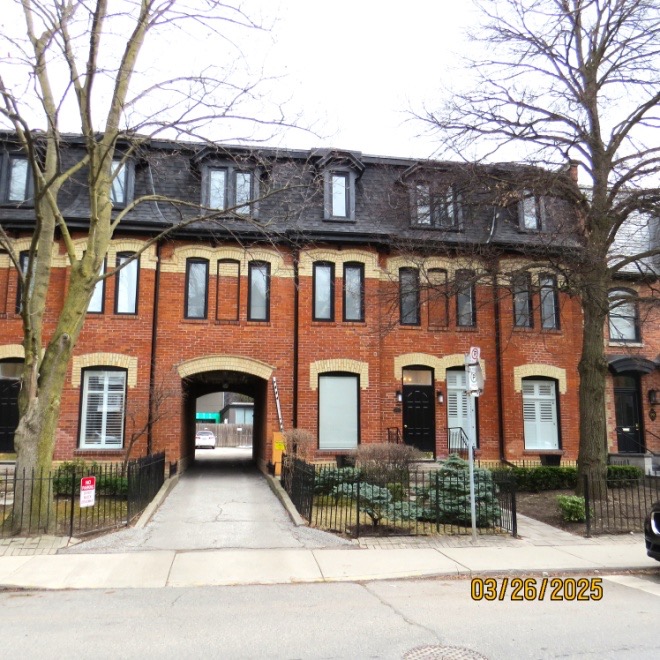
Some “humble” semis:
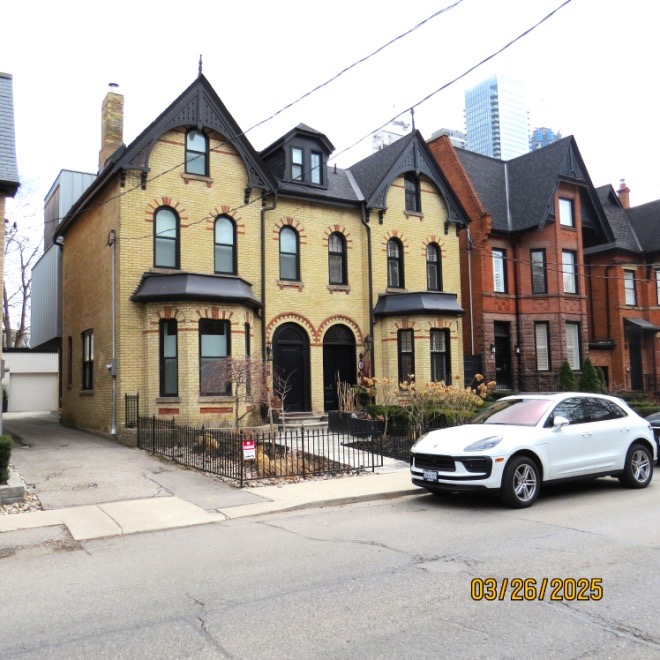
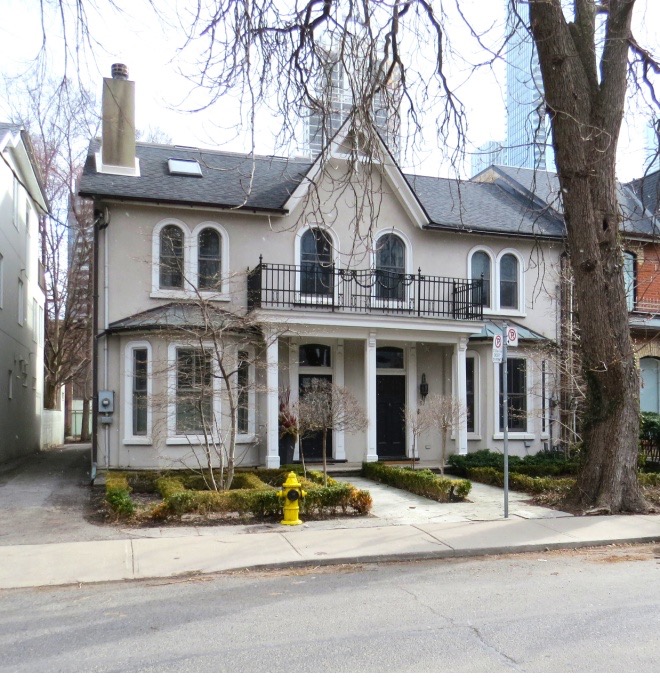
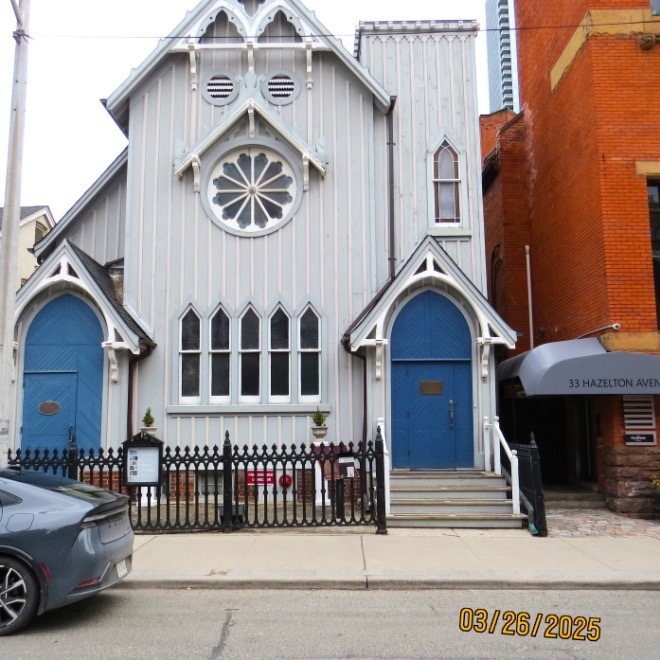
We paused at the Heliconian Club (for ladies) which occupies a former Presbyterian church built of wood in a style called Carpenter Gothic.
Walking along Yorkville Ave., we came to the orginal Mt. Sinai hospital building which has luxury condos built over top and a Chanel boutique on the ground floor. We tried to take a group photo but the concierge chased us away.
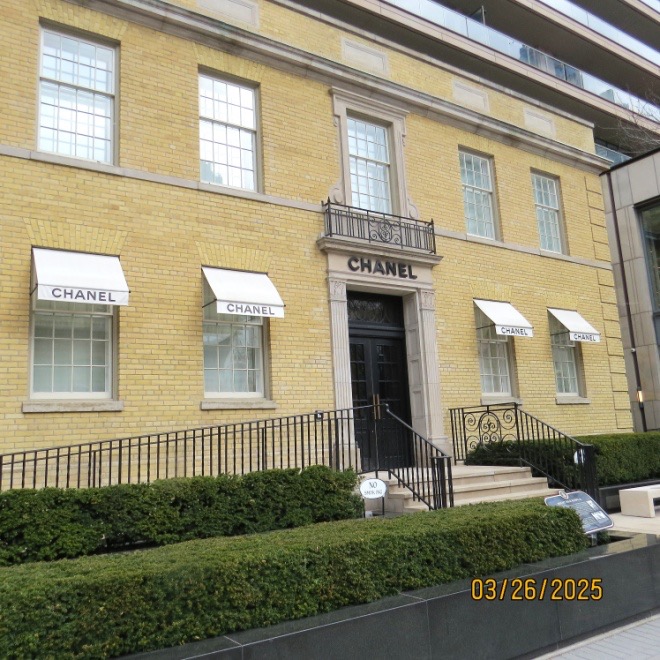
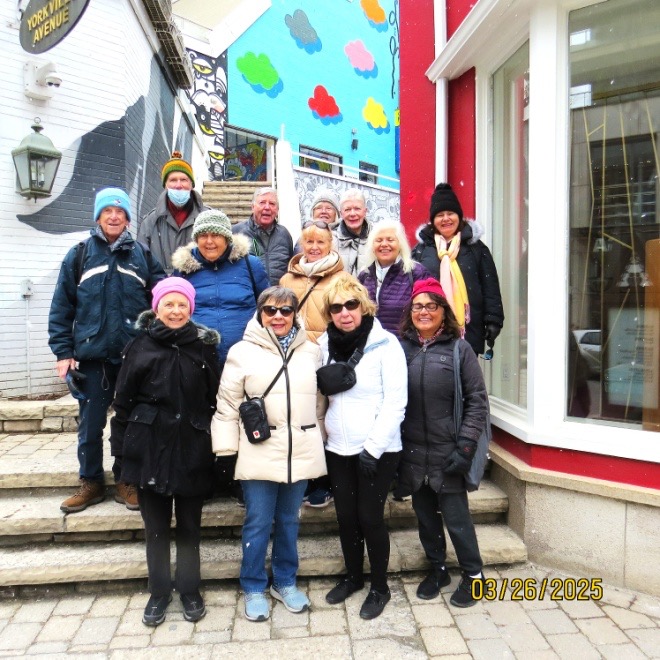
So, we crossed the street for the photo. Here is the happy group at the end of the walk.
 Probus Club of Kingsway-Islington