
January 22, 2024 Meeting Summary
Our Probus meeting on Monday, January 22nd featured Dr. David Chandross, (M.Sc., M.Ed., Ph.D.), as our speaker. The title of his talk was Artificial Intelligence and the Future of Mankind.
Dr. Chandross approached the discussion of AI in a clear, skilled presentation and explanation of the impact that Artificial Intelligence (AI) is about to have on all aspects of society. His presentation was direct, easy to understand, and delivered in a professional and occasionally lighthearted fashion.
By reviewing the history of technology and computing, Professor Chandross believes that we are at an inflection point in the development of Artificial Intelligence, in much the same way that the iPhone was at an inflection point in 2009 when it revolutionized the way that people live.
Dr. Chandross acknowledged that introduction of AI in all functions of human existence has an unsettling aspect. He asked if AI can replace man, what is the future of society as we know it now? Will machines be able to think just like humans? This, he pointed out is the quandary that we face.
Dr. Chandross outlined the benefits and the risks AI will inflict on everyday life at work and the conflict we will have to face and solve. Beyond the mere replacement of manual workers and the collapse of retail giants to online automated services, rapid advances in artificial intelligence are shaping our future. From neural networks, to simulated digital patients, to virtual reality, to computer ‘doctors’, artists and musicians, AI will change our lives.
AI will soon surpass man’s abilities and the speed that we can function at. The wealth of information that AI can access and the processes that AI is capable of will make it indispensable in the workplace. AI will be a strong asset in the design, planning and coordination of all activities that man currently performs, and will do it faster and more efficiently than we can. AI’s ability to use multiple databanks to enhance its functionality will supersede man’s capabilities.
Dr. Chandross ended his presentation by expressing his hope that man will be able to respond positively to and effectively manage this extraordinary scientific development.
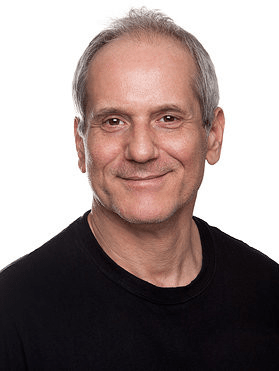
Dr. David Chandross (M.Sc., M.Ed., Ph.D.) is currently a senior scholar in residence at the Ted Rogers School of Management at Ryerson University. He holds masters degrees in both cognitive neuroscience and higher education and a doctorate in curriculum design. He has done pioneering work on the role of learning in the prevention of dementia in seniors and the use of technology such as virtual reality.
To learn more about Dr. Chandross’ thoughts on AI, below are a couple of articles about AI from Dr. Chandross linked-in account:
 Probus Club of Kingsway-Islington