
By James Rayner
On March 14th, a dozen members of The Walking Club kicked off the new year with a walk through the old Town of West Toronto and West Toronto Junction. West Toronto was an independent town until the early 1900s when it was annexed by the expanding city of Toronto. West Toronto Junction or simply “The Junction” was a community that grew up around the junction of the main East-West and North-South railway lines. The railways provided well-paying jobs, resulting in some fine civic buildings in the area. The Heintzman piano factory was located in the Junction too.
We began our walk at the Runnymede subway station, proceeding north on Kennedy Avenue to Glenlake and Glendonwynne Road. At that juncture is located Western Technical-Commercial School, a huge school, covering a whole city block, where I began my teaching career. At its peak enrolment, it had 2,800 students and a staff of 180. We needed a photo book of the staff so we would get to know each other’s name.
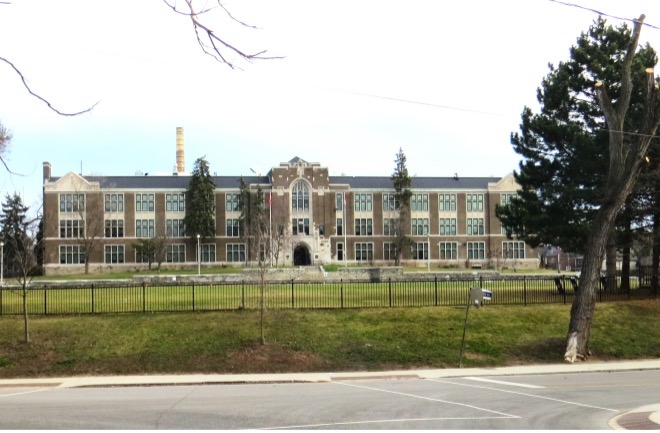
The school was built when schools were highly respected. The architecture of Western Technical-Commercial School reflects this attitude.
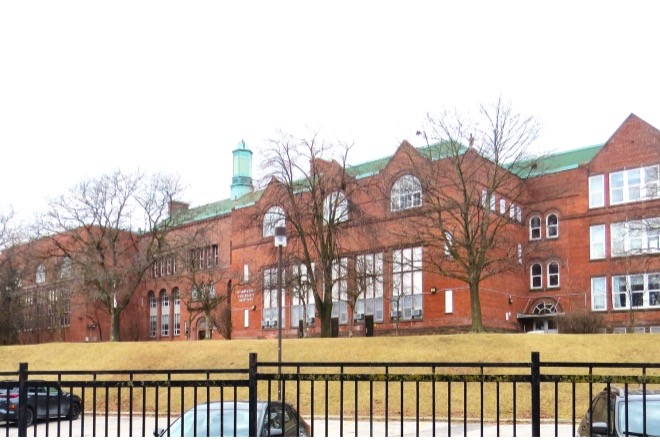
Continuing along past Western Technical-Commercial School, in two blocks, at Quebec Ave., we come to another respected institution, Humberside Collegiate Institute. It was originally known as West Toronto High School but the name changed with amalgamation. I guess it was an easy choice as the main entrance of the original building faces Humberside Ave.
Again, the architecture reflects the importance and respect that schools enjoyed in the past.
After Humberside C.I., Quebec Ave. led us to Annette Street where there are many fine buildings to be found. Some of them are churches, although several of them have been or are being converted to condominiums.
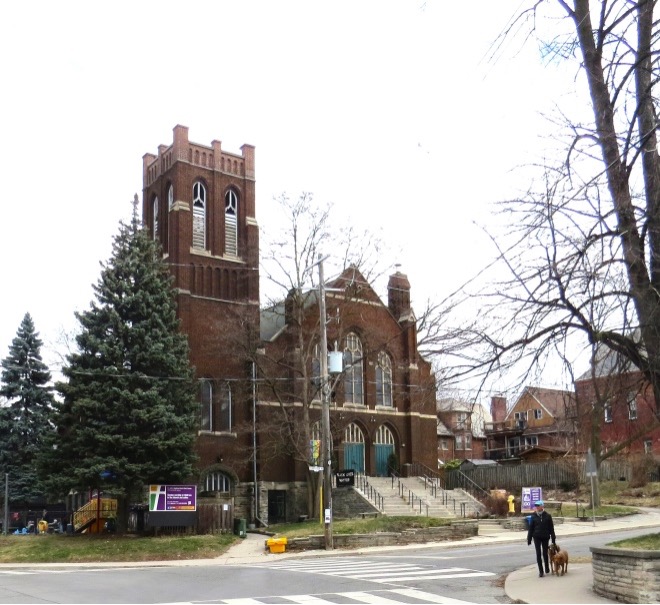
St. John’s Anglican church is located across from Humberside Collegiate Institute.
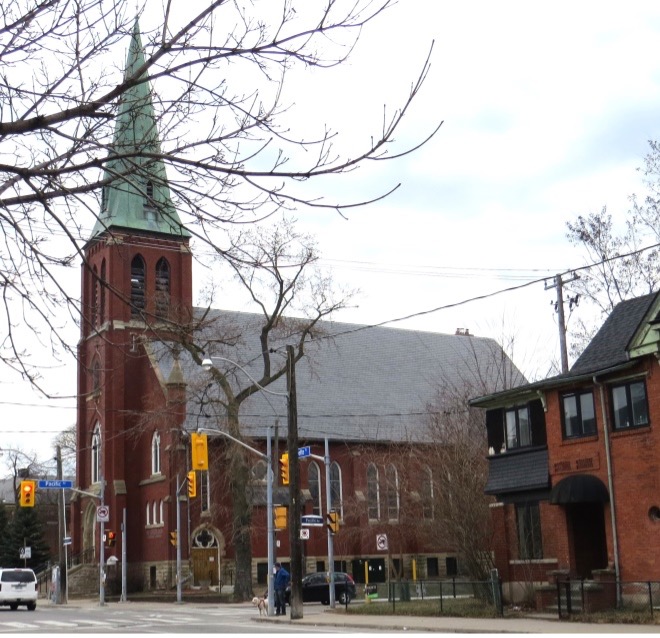
At the corner of Pacific Avenue, there is St. Cecelia’s Roman Catholic Church.
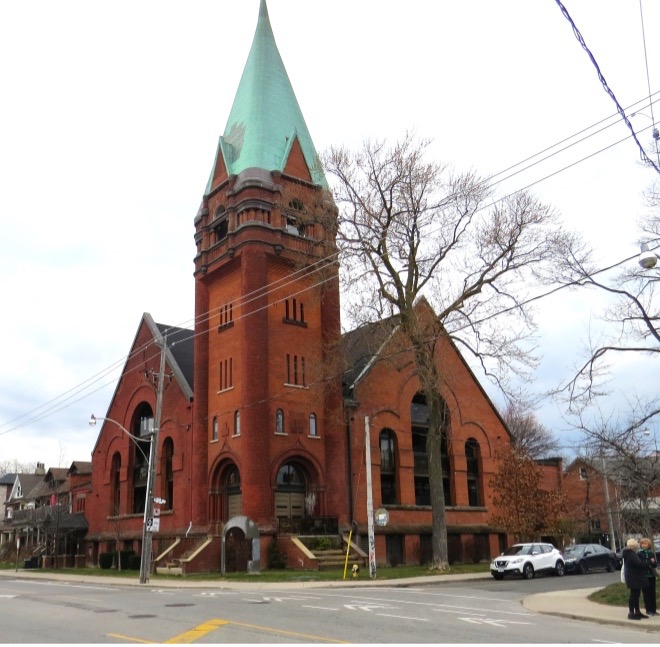
The Presbyterian church is now condominiums. The former steps are now flower beds.
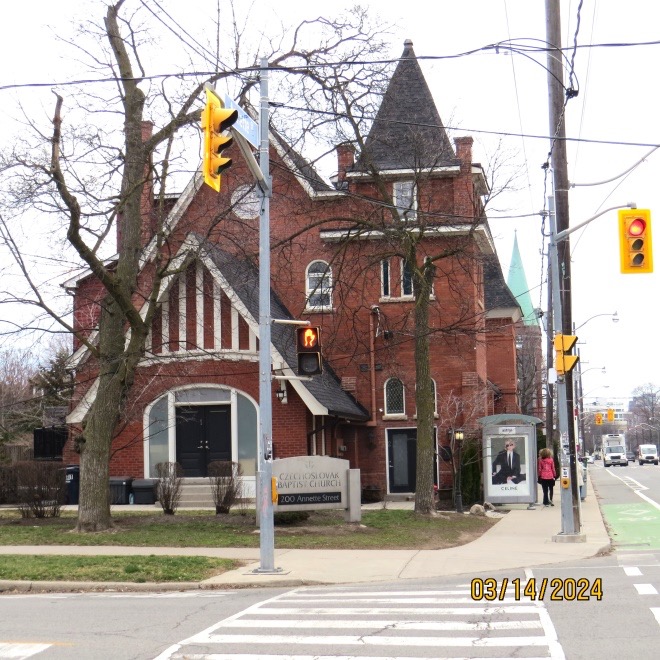
The Czechoslovakian Baptist Church at 700 Annette Street are also now condominiums.

Finally, the former High Park United Church is being repurposed as condos. The size and design of these buildings reflect a once prosperous community. Here are a couple more buildings that reflect that prosperity.
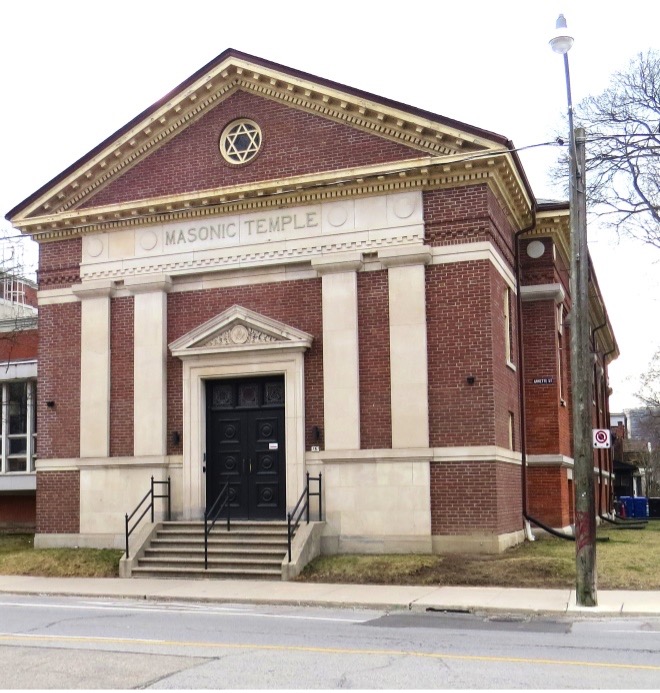
The Masonic Temple . . .
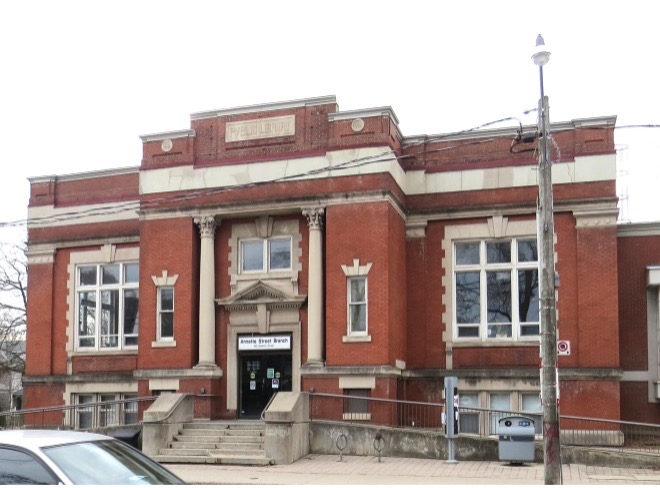
. . . and the Public Library.
Just east of High Park Avenue, we turned north on Pacific Ave. to arrive at Dundas Street West, the heart of The Junction. After the railways switched to diesel engines, many of the maintenance jobs (and the roundhouse at Runnymede and St. Clair Avenue) disappeared and the area started to decline. Some vestiges of the past prosperity remain along Dundas and there are signs of a restoration of a better life for the neighbourhood with new condos being built and new businesses opening.

The utility wires were removed along Dundas and banners hung to define the area and make it more attractive.

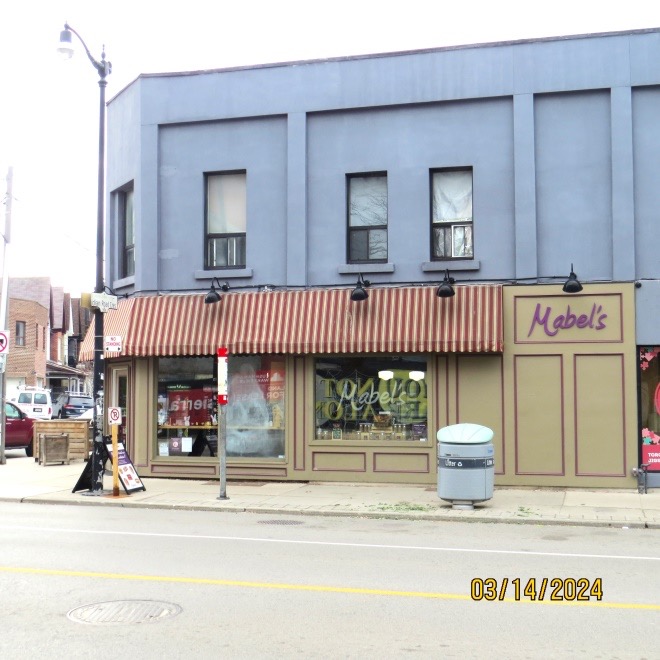
Along Dundas, you will find many traditional stores, including a new LCBO in this condo building, there are also many little “funky” businesses that are unique to the area.

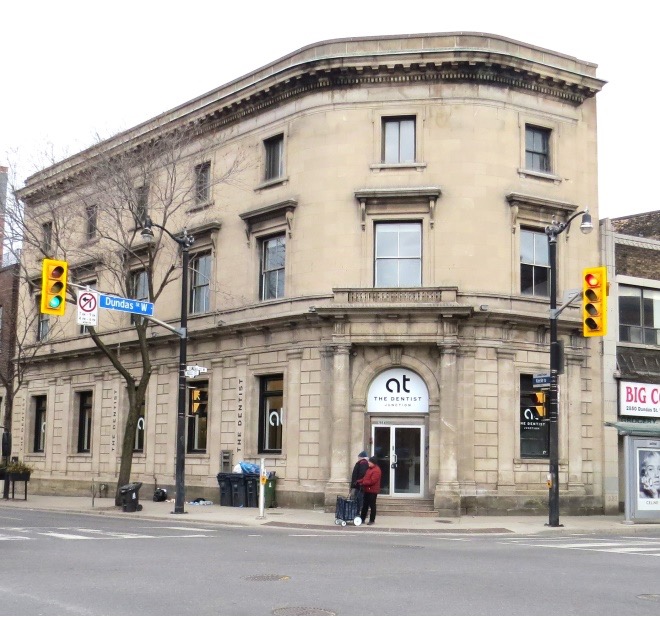
Just a couple of reminders of the past when architecture was used to impress. As you can see, these buildings have been preserved and/or restored but also repurposed.

Former workers’ cottages on Mavety St., are now worth well over $1,000,000.
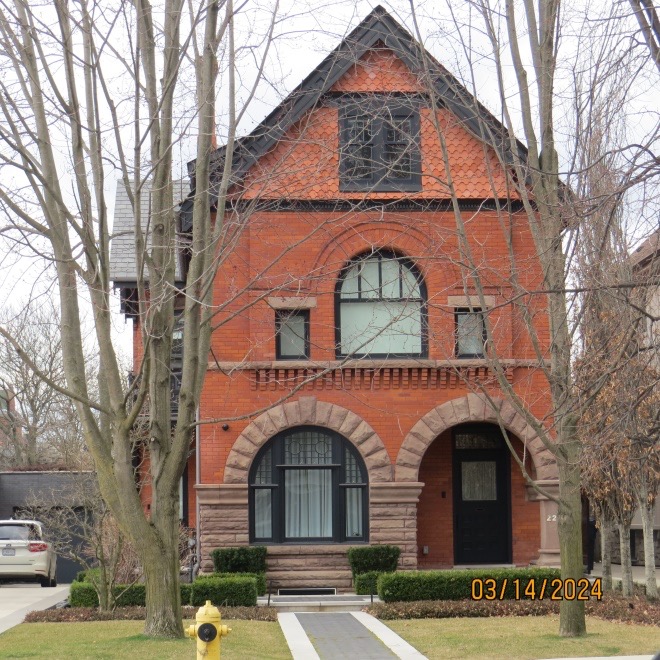

We headed back down High Park Ave. to the High Park station and home. This street was once home to affluent homeowners but now most houses are subdivided into flats. However, the architecture still exists to be admired.
The icing on the cake was that, since our walk took less than two hours, we didn’t have to pay a new fare to ride the subway.
If you are interested in joining us on our exploratory walks, please contact me at lebonprof@rogers.com.
 Probus Club of Kingsway-Islington