
The most recent outing for the Walking Club was a visit to Forest Hill, an affluent part of Toronto named after a summer home that existed at the top of the hill on Eglinton (one of Toronto’s highest points) in the 1800s. It was a separate village, founded in 1928, with its own police and fire departments, but it was swallowed up by Toronto through amalgamation. However, certain distinctive features of the landscape still exist to remind us of the past.
We travelled to Eglinton West subway station from Royal York. Because of the on-going construction of the Eglinton LRT, we had to detour west one block to Park Hill Road.
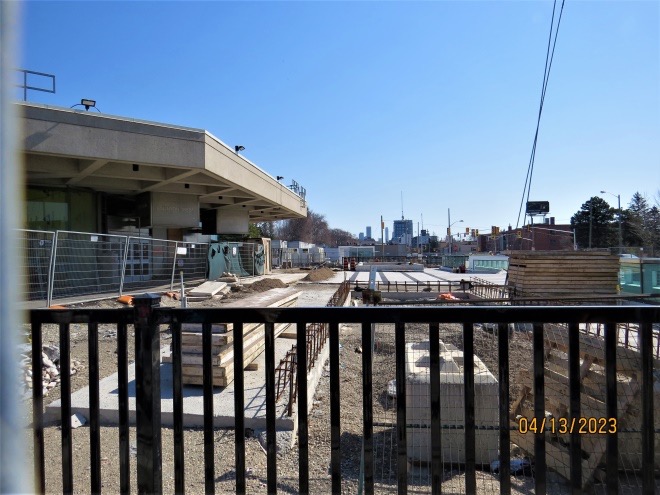
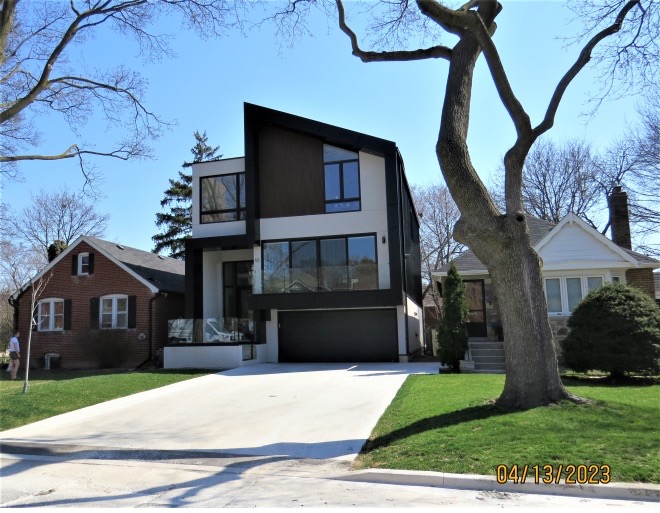
This part of Forest Hill is quite modest but, like most neighbourhoods in the city, many existing homes are being replaced by new construction.
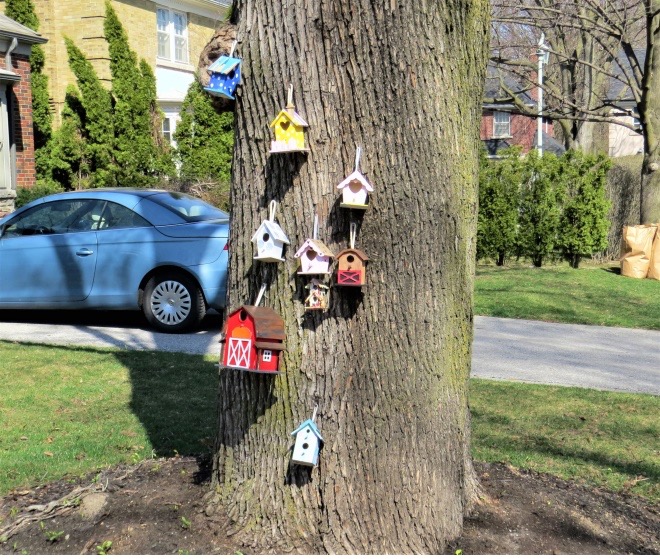
On Park Hill Road, we found some whimsical birdhouses.
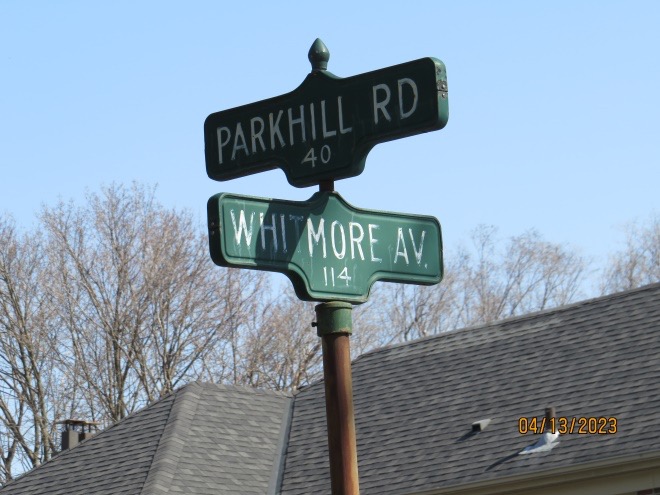
At Whitmore Avenue, one of the former village’s street signs still exists.
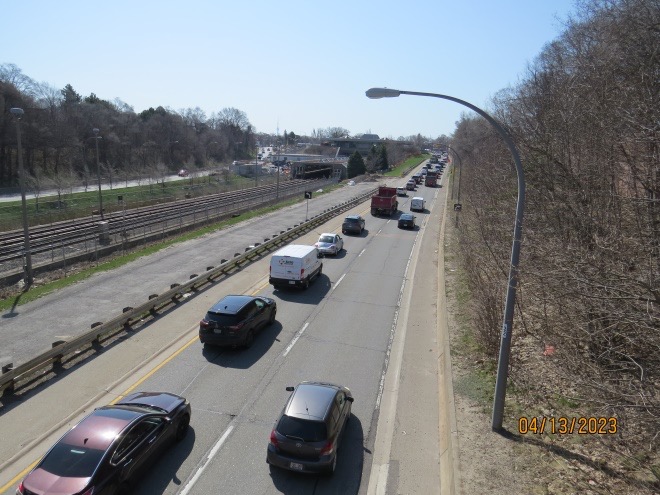
Taking a slight jog to the right, continue on Park Hill to Aldburn Road and turn right (east). There is a bridge over the perpetually jammed Allen Road that ends at Eglinton.
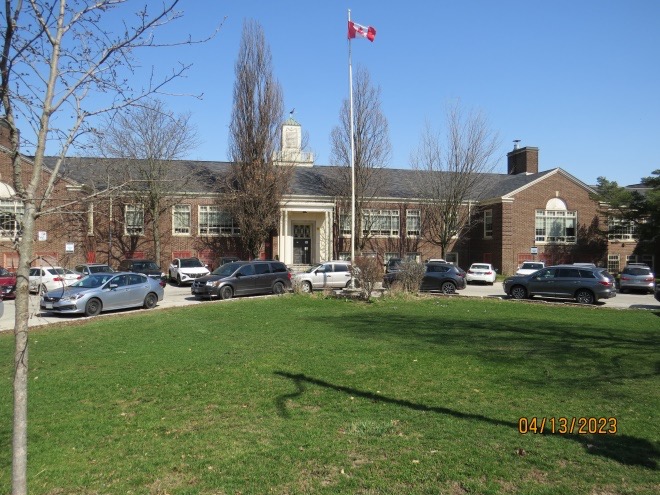
Aldburn leads to Glenarden Road which curves around a school yard. Forest Hill had two “junior” schools, East Preparatory and West Preparatory. This is West Preparatory:
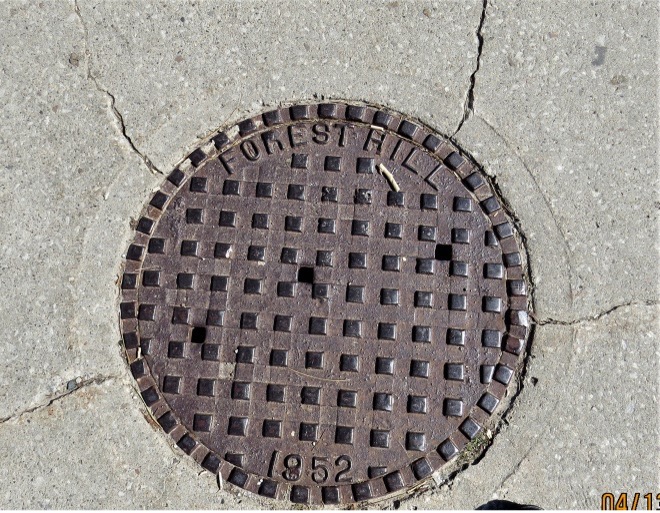
It was on this sidewalk that we found another vestige of the old Forest Hill Village:
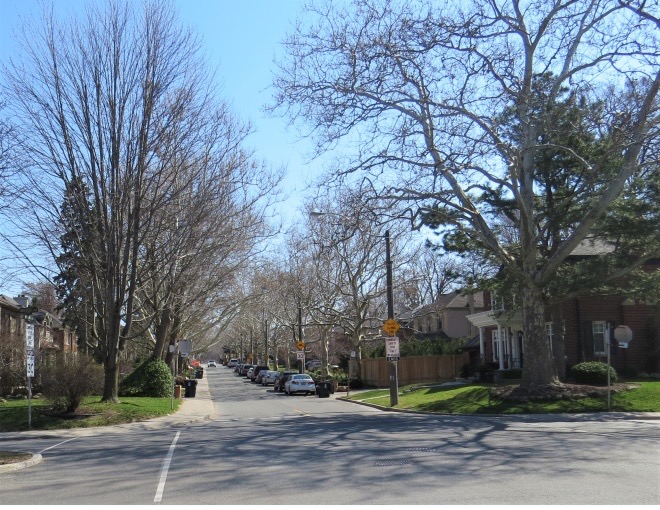
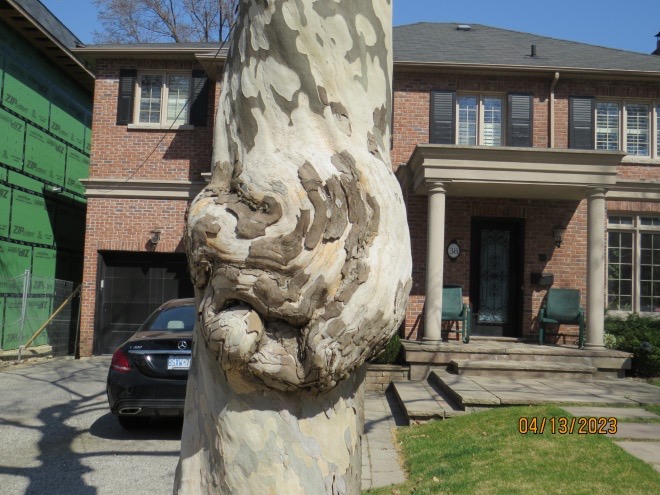
At the corner with Ridge Hill Drive, turn left and follow Ridge Hill Drive east. Ridge Hill has been planted with a grove of plane trees, a fairly rare species in Toronto.
One of the trees had an interesting burl on it.
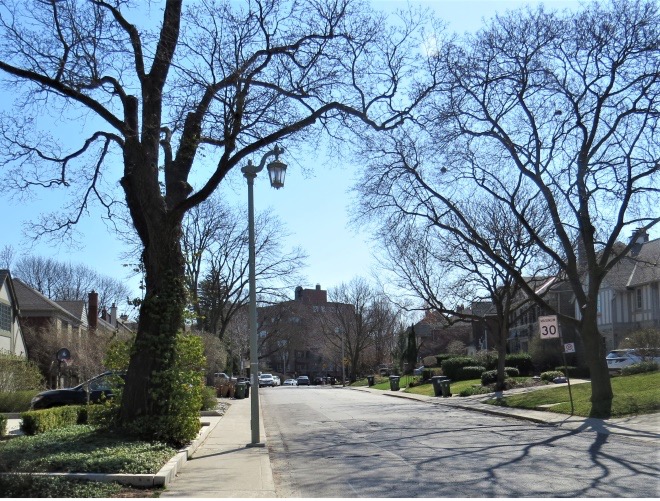
At Hilltop Road we turned right one block to Old Forest Hill Road. When this street crosses Bathurst, it has its own bridge said to be due to the influence of the residents.
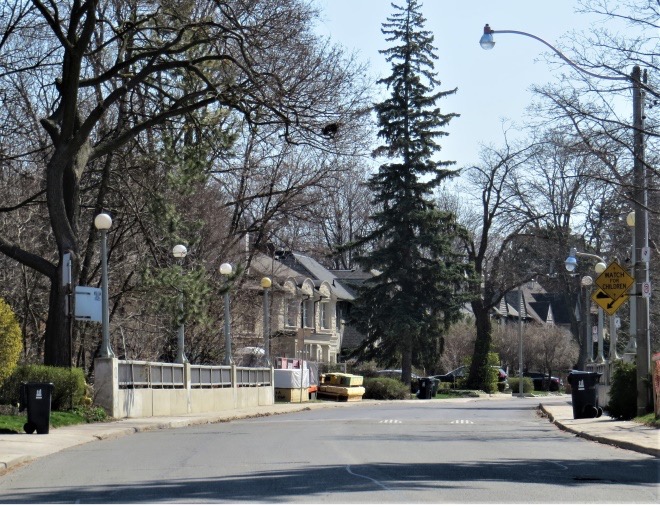
This section of Forest Hill still has some of the distinctive streetlights from the old village.
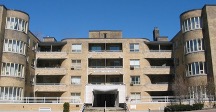
At Eglinton Avenue, there are some fine examples of 1940s-50s architecture, one of which is Forest Hill Manor.
After crossing Eglinton, Old Forest Hill Road is lined with the traditional Tudor mansions, all of which had to be architecturally designed and approved.
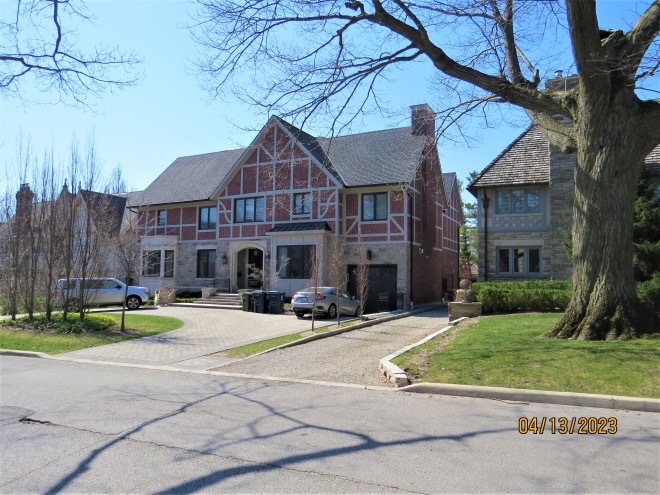
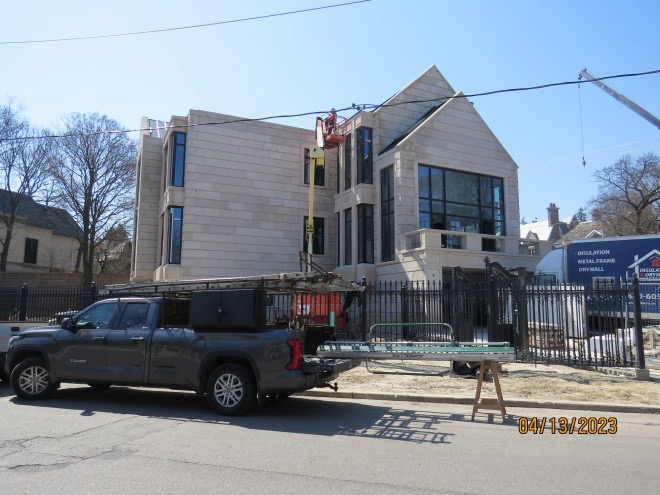
However, new construction is everywhere and many of these mansions are being demolished to be replaced by today’s style of homes.
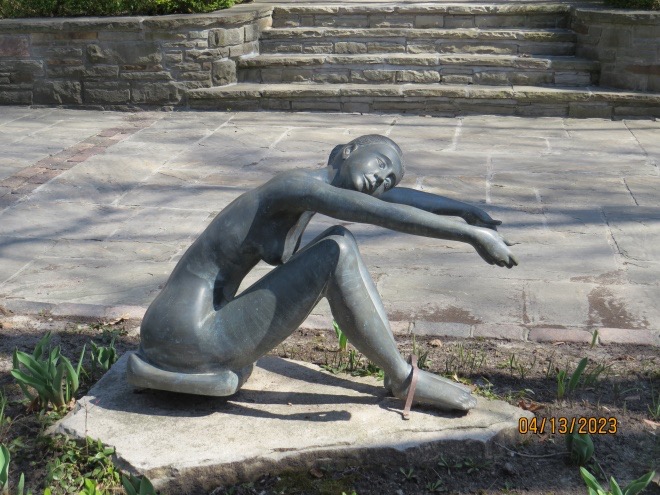
Along the way, we came upon some surprises. Notice how she is anchored to the rock!
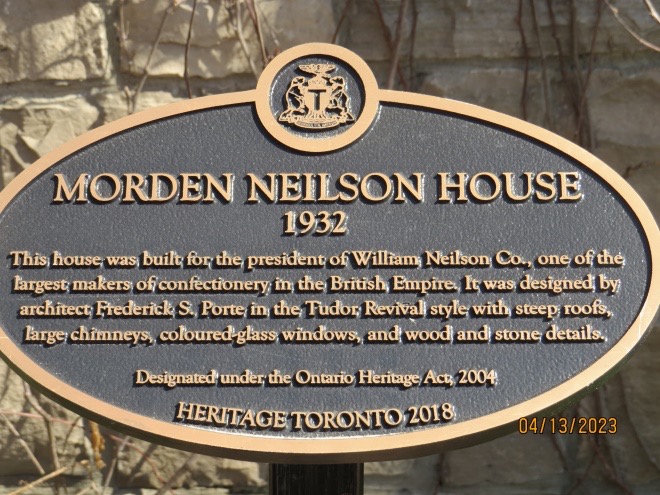
Another surprise was the Neilson House, built for a founder of the Neilson chocolate company..
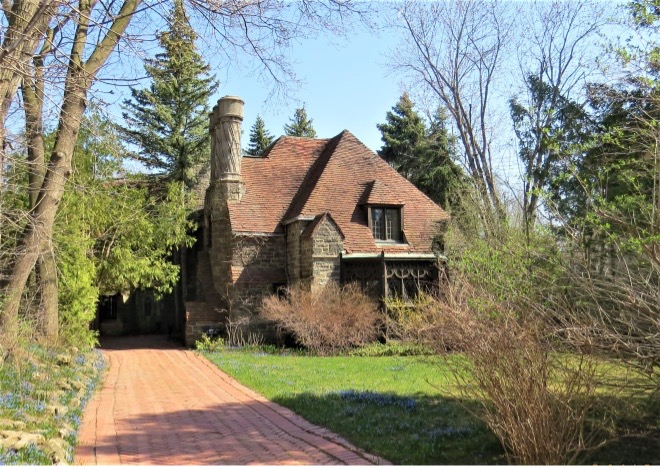
At Spadina Road, we went one block north to Forest Hill Road and turned right (east). Here is a dwelling on Spadina.
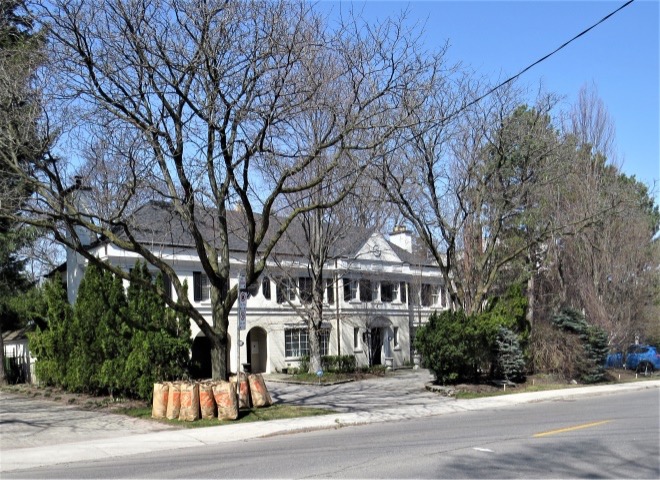
Forest Hill Road has some beautiful homes on it but, again, some are being replaced in favour of something more modern.
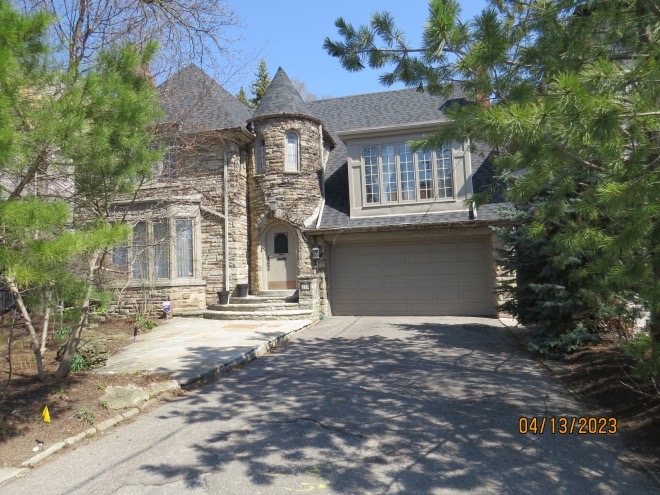
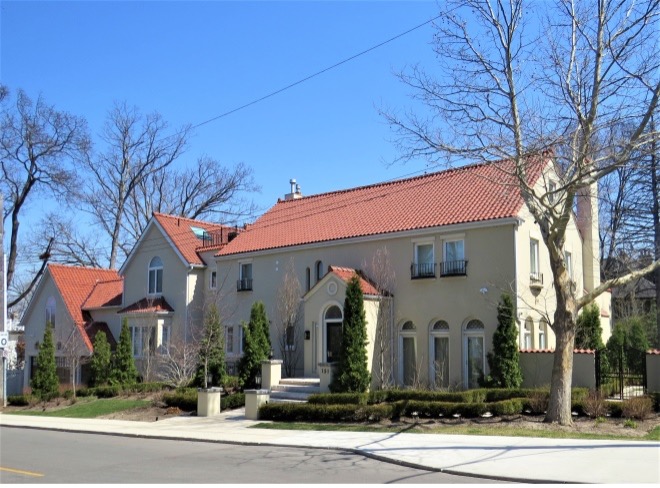
Further south, there is an example of Spanish Revival:
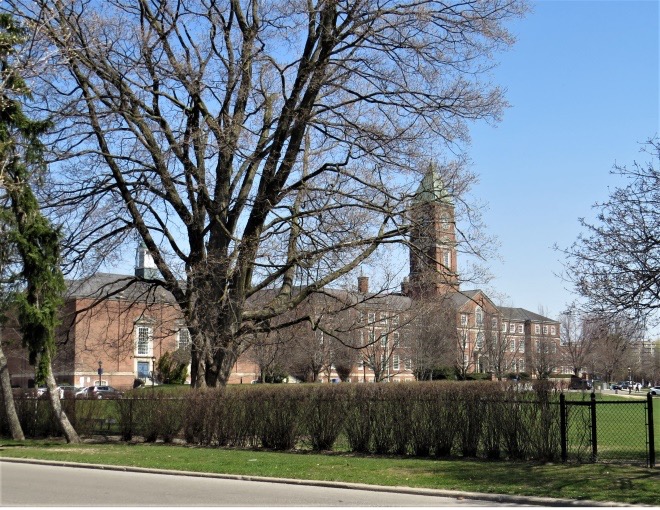
At this point, Forest Hill Road passes by the grounds of Upper Canada College.
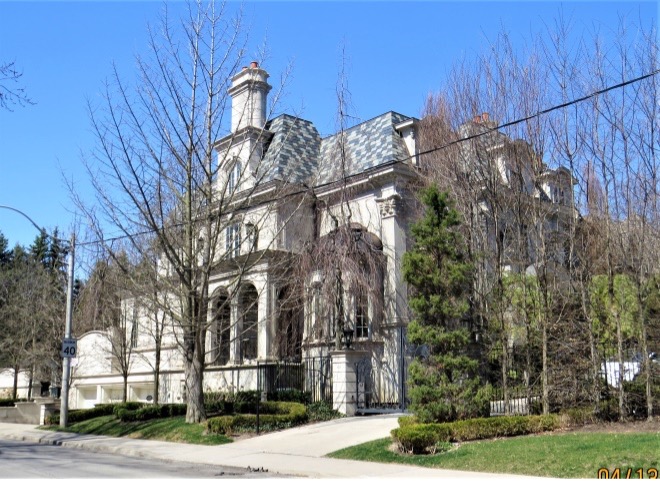
At the corner of Heath Street, is an example of architectural “overkill”. The neighbours even tried to stop construction when the design was revealed.
To end the walk, continue south on Forest Hill Road to St. Clair Avenue where you can catch the streetcar to the subway and home.
This journey explored the northern and eastern parts of Forest Hill. In the future, we plan to explore the central and southern parts.
 Probus Club of Kingsway-Islington