
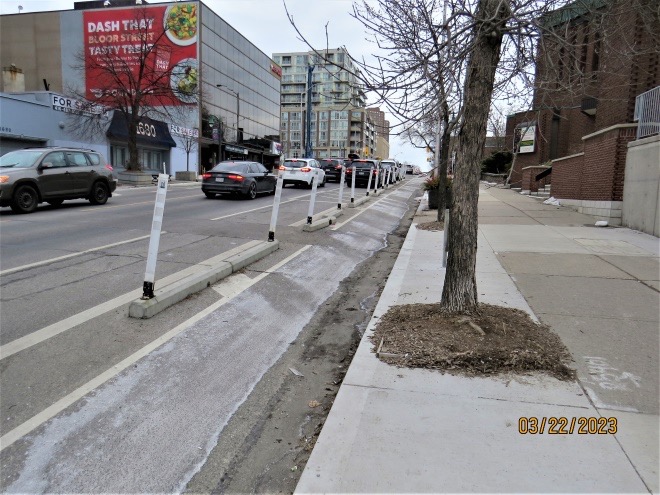
On Wednesday, March 22, the Walking Club was finally able to get back to walking. This outing started at the Keele subway station where we crossed Bloor St. and walked east to Indian Road. On the way, we noticed the new bicycle lanes that have been installed to encourage more bike riding and fewer autos on the road.
Some of you are aware that I am fascinated by architecture and that I appreciate past efforts to make the city beautiful through its buildings. Indian Road is a beautiful walk, not only because of the grand old trees but also for its variety of architectural styles. (Indian Road was actually an indigenous trail that led from the lake to what is now Dundas St.)
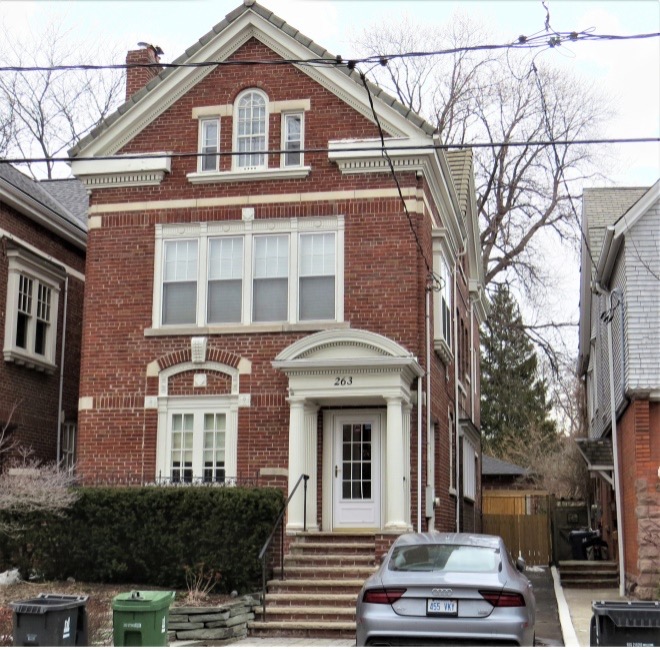
The first house we came to is an example of the Arts and Crafts style.
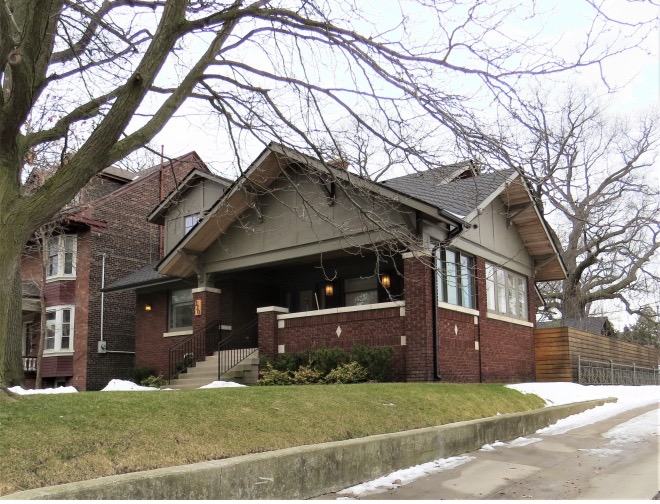
There was another beautiful example further down the street.

We were all struck by the state of many of these houses; they are very well kept up, although some have been divided into multi-unit homes.
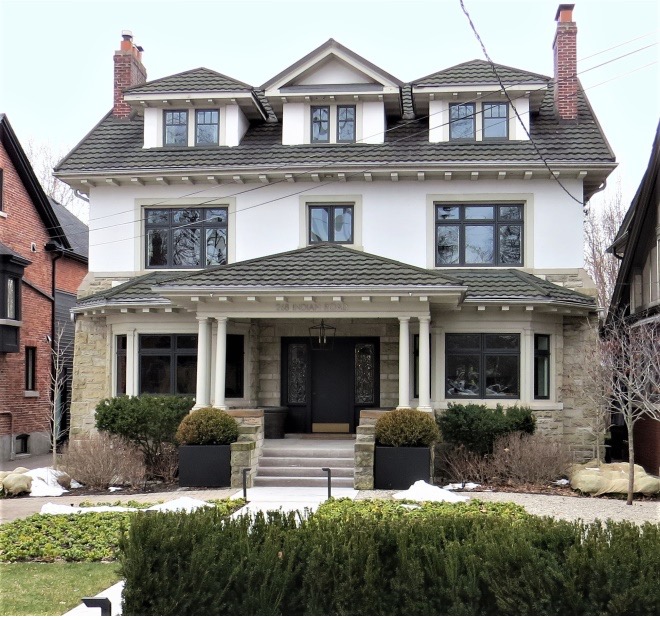
Here is an example of updating without destroying the original.

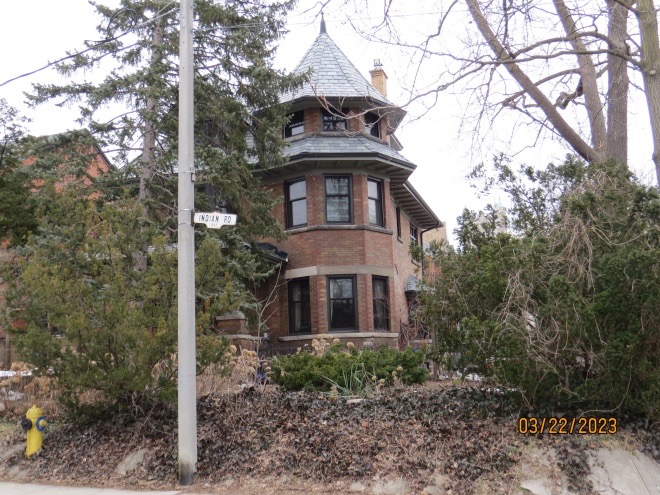
Another style that shows up is the Queen Anne with its whimsical towers.
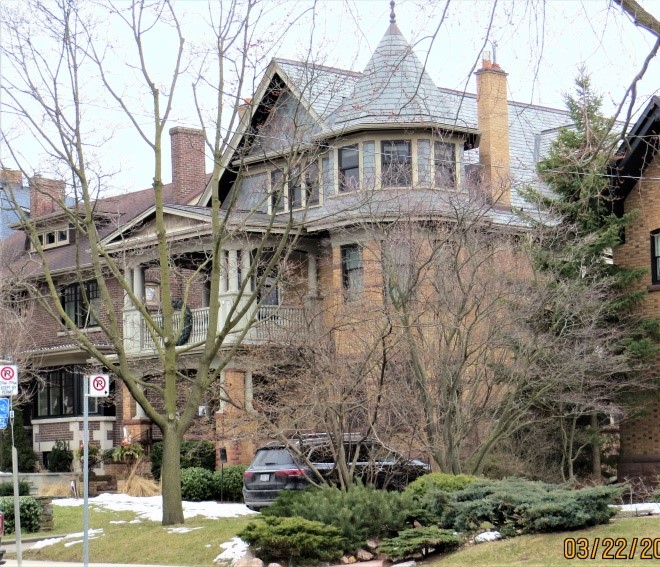
Other grand residences are a mix of styles:
We came upon a “Lending Library” on someone’s front lawn. A lot of thought went into making this one.

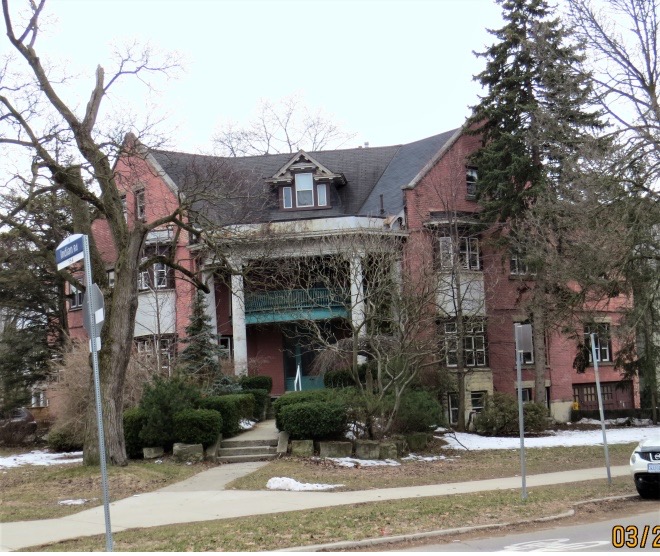
When we crossed High Park Boulevard that runs from Roncesvalles to Parkside Drive, we admired the grandeur of the homes that are still well maintained. However, there is a multi-unit building on the corner of Indian Road that has seen better days.
Just down the street from this intersection is the iconic High Park Curling Club.

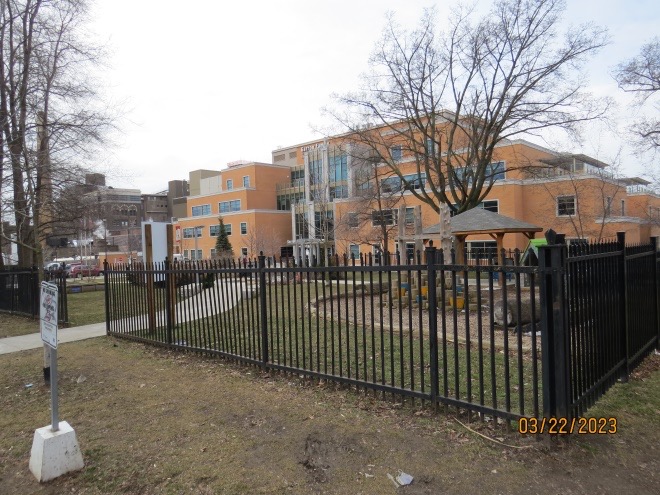
At the end of Indian Road, just north of the Queensway, we cut across Parkdale Rd. behind St. Joseph’s Hospital. Seen here is the rear of the hospital with its fairly new Our Lady of Mercy wing.
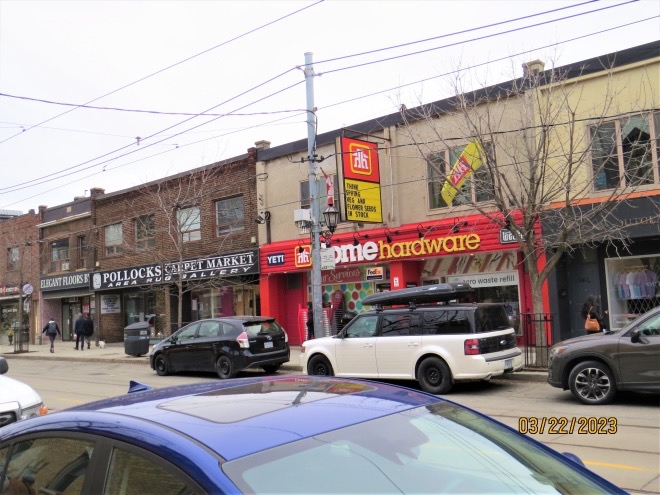
Upon reaching Roncesvalles Ave., we turned north toward Bloor St. Many of Toronto’s iconic businesses are found on this street, including Pollock’s Carpet Market & Hardware.
(Roncesvalles is a gorge in Spain where British forces battled Napoleon. Colonel Walter O’Hara (1789-1874) took part in that battle and to commemorate the occasion he used the name for the road that he built through his property north of Queen St. that led to Dundas St., the main east-west road at the time.)
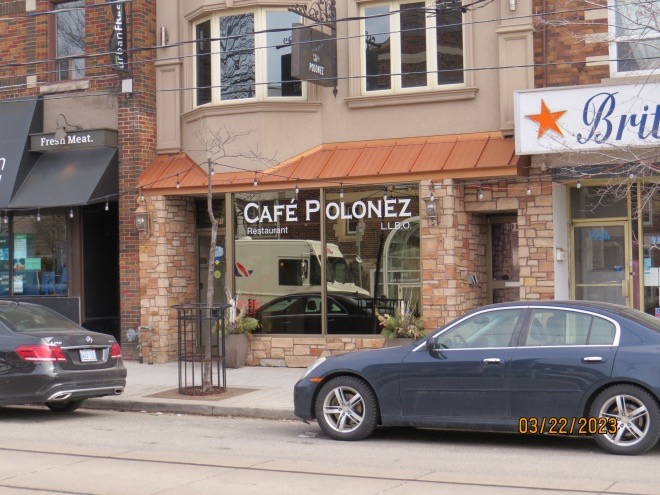
One of Tim’s favourite restaurants, Café Polonez, is in this stretch too.
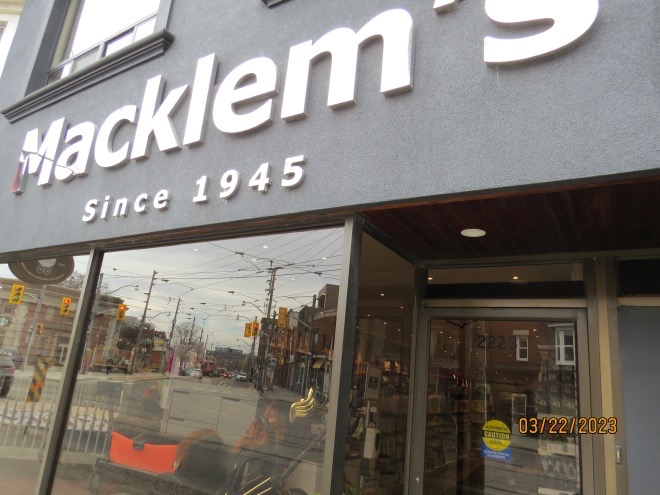
Toward Bloor St., just where Dundas St. meets Roncesvalles is another iconic store: Macklem’s. For all things to do with babies, that was the place to go when we had our children, and it still is, even recently being renovated.
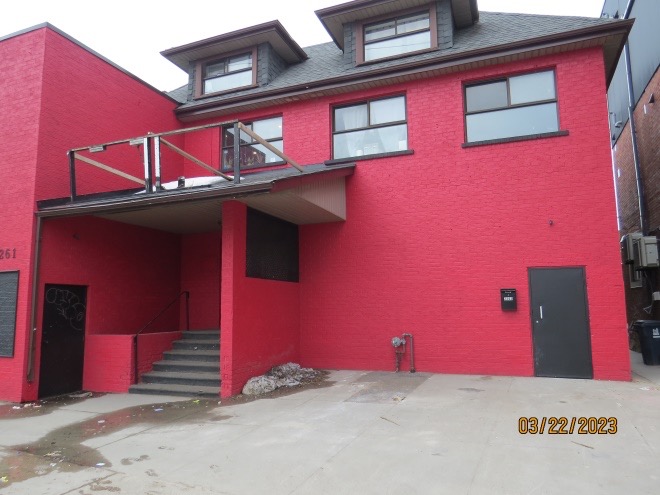
Just north of Dundas is the site of Hugh’s Room, a performing venue that closed during COVID. Its future is unclear at the moment.
This was a fascinating walk in itself, but the icing on the cake was a visit to Roncesvalles United Church (at Wright Ave.). The church features murals by indigenous painters who offered to decorate the inside walls of the church with their work called “Eight Fire” on the “Walls of Welcome” showing the creation story.

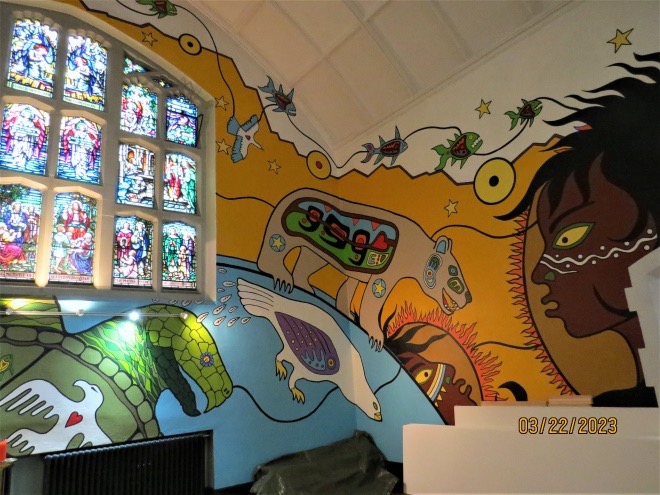
These murals are in the “woodland’ style where all the elements are joined by the black energy line that shows that they nurture each other and are dependent on each other, just as we are on each other and our natural world (per the handout we were graciously given). Notice how the colours of the murals pick up the colours in the stained glass windows.
As a bonus, at the rear of the church, the artists were preparing another installation for Mohawk College; it is in panels to fit a round room.
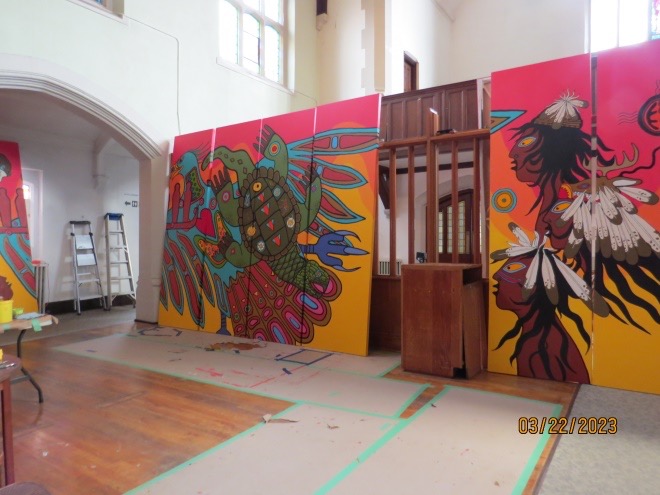
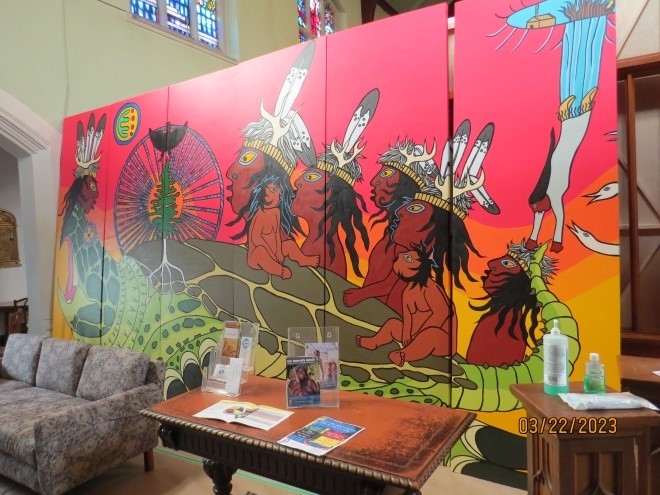
The church has generously allowed the artists to use their space to paint these panels.
Perhaps it is serendipity but often, on our walks, we happen upon something that is out of the ordinary, and this was one such occasion. We all agreed that this was, indeed, a special end to our outing.
 Probus Club of Kingsway-Islington