
A Tale of Two Revolutions
May 25, 2021 Meeting by James Rayner
Carole Jerome—Revolution Reporter
As a CBC reporter stationed in Paris in 1978, little did Carole Jerome anticipate that she would become intimately involved, not in one, but in two revolutionary movements. That year, Ayatollah Khomeini and his lieutenants landed in a village just outside Paris, demanding interviews with the media so they could spread their views on the unfolding Iranian revolution to the world. Carole was sent to interview him, thus beginning a grand adventure that would continue for several years.

While interviewing Khomeini, Carole noticed his dark, expressionless eyes, those of a “dark soul” as she put it. Although he spoke of a democratic revolution that would bring enlightenment to the people of Iran, Carole suspected that Khomeini had other intentions, i.e., the establishment of a theocracy directed by clerics with little or no improvement in freedoms. Meanwhile, she interviewed one of his supporters, Sadegh Ghotbzadeh, asking him what would come after seizing power. He didn’t know exactly, just had some vague idea of restoring democracy. Nevertheless, she was taken by his charisma and developed a “relationship” with him, all the while remaining objective in her reporting.
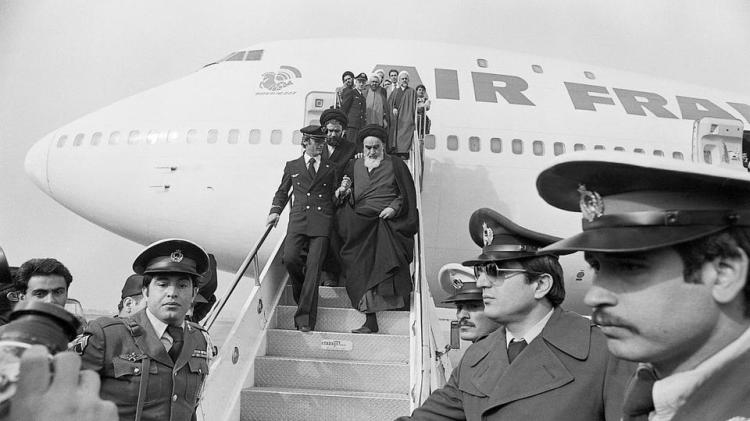
When sent to Tehran to cover the revolution, she found herself on the same flight as Khomeini who was returning to take power. Carole likened the experience in Tehran to being present in Paris at the French Revolution. However, the heady feelings of creating a new Iran soon were crushed: Khomeini declared that any opposition to his government would be considered blasphemy; the new constitution was presented as a “fait accompli”, with no consultation with supporters; women had to wear covering from head to toe; during the Iran Hostage Crisis, Khomeini backed the radical students while moderates lost any remaining influence they had; Khomeini authorized torture and rape of prisoners.
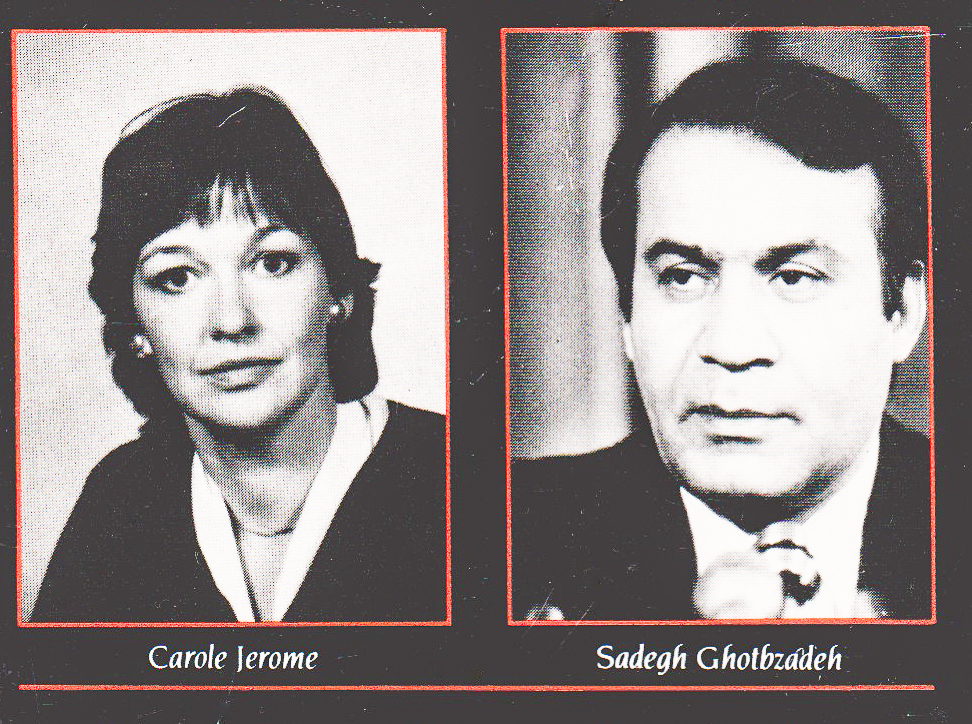
In light of the above, Sadegh finally organized a counter revolutionary movement, although he had no chance of succeeding. He could have fled the country but chose to stay and fight. He was eventually arrested, tried and executed; Carole was accused of being CIA, and missed being arrested by 3 hours.
Having escaped the terror of Iran, in 1982 Carole went to report on the Sandinista Revolution in Nicaragua which had been waged against the dictator Samoza who was propped up by the CIA. Supporting Latin America strongmen was basic U.S. policy as it was good for U.S. businesses, but left the people of the country so poor and without hope that they had no choice but to revolt. The revolution was over and the new coalition government seemed promising with its progressive programs of literacy, education, road building and land reforms. The U.S. president at the time, Jimmy Carter, was supportive. He was soon replaced by Ronald Reagan who was concerned with the abuse of human rights by those he labeled “communists”, but he was really concerned that these reforms were a threat to American business interests. Consequently, the U.S. organized an army of “contras” based in Honduras who would attack anyone in Nicaragua, hoping to provoke a response that would allow the Americans to intervene. As a result, America returned to its role as the enemy, the only America that Nicaraguans had known.

The “contra” war was a 10-year disaster which nobody won, only giving more power to certain leaders of the government like Daniel Ortega and driving him into the arms of Cuba and Russia. The hopes of the Nicaraguan Sandinista revolution had been dashed, just as hopes were dashed in Iran. Ortega and his wife now run the country, have eliminated some opposition parties, hold suspect elections, while the opposition parties squabble amongst themselves instead of uniting against these abuses.
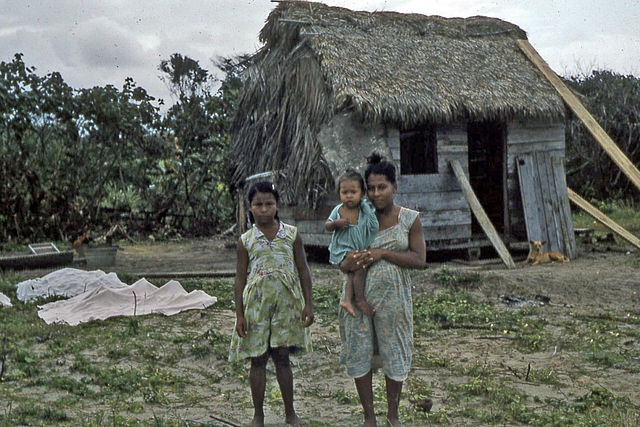
Indigenous people are being decimated and their lands expropriated. Another revolution with great promise that has gone wrong. Sanctions are now being imposed, and Carole urged us to write to our MPs and Chyrstia Freeland, the Deputy PM, to put more pressure on the Ortegas.
You might ask, what has Carole observed as to why revolutions seem to go wrong and end up just as bad or worse than the regime they strive to replace? Here is her list of three commonalities:
- The moderates in a revolutionary group tend to splinter, allowing extremist hard-liners to take over with the plan they have had from the beginning;
- An external crisis occurs, giving power to extremists to consolidate their hold (Saddam Hussein attacking Iranian oil refineries, the Contra army attacks);
- Each revolutionary group has a “key” figure who is politically astute and who already has worked out his plan while other revolutionaries expect to work one out after gaining power. (Khomeini, Ortega).
Having lived through two of the 20th century’s revolutions, Carole Jerome has learned a lot about human behaviour and the art of seizing power. Her adventures and insights can be found in her numerous books, including The Man in the Mirror about the revolution in Iran, and her latest publication which will appear shortly, about the Sandinista insurrection in Nicaragua.
 Probus Club of Kingsway-Islington